On June 27th to 29th a group of twelve
of us visited the battle sites of the Somme, hoping to see the area
where Vernon Birds went into action and was wounded on July 1st 1916.
We stayed at a hotel in Peronne and on the Saturday were taken round
various sites by Peter Smith a very knowledgable and stimulating tour
guide. He lives in the Somme area, from which he runs a B&B and
tour guide business with the internet address ( http://www.fieldsoffrance.com
), and for anyone planning a visit he would be well worth
contacting. The tour had been set up for us by James Power of
Somme Battlefield Tours Ltd (http:www.battlefield-tours.com ),
and he provided extensive documentation as well as locating Peter Smith
for us.
The Saturday tour, using four of our cars, covered a comprehensive trail through the sites, but to my mind the first and last were the most memorable, that is the site of the Devonshires’ trench at Mansel copse and the area near Beaumont Hamel where the 16th Middlesex, including Vernon Birds, went over the top and the Hawthorn Redoubt was blown.
The Devonshires
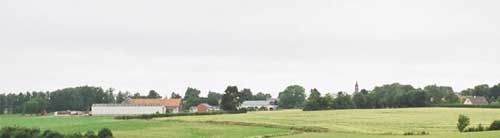
We parked our cars just below the site of the Devonshires’ trench from which we could see the region which had been the enemy line below on the horizon, with the trench behind us. The problem had been that there was a machine gun post in Mametz, the village opposite left, which was trained on the left flank of the trench. The machine gun was in a tower to the right of the red roofed barn shown below in the picture which I have cropped to give an as from the trench view.
The Saturday tour, using four of our cars, covered a comprehensive trail through the sites, but to my mind the first and last were the most memorable, that is the site of the Devonshires’ trench at Mansel copse and the area near Beaumont Hamel where the 16th Middlesex, including Vernon Birds, went over the top and the Hawthorn Redoubt was blown.
The Devonshires
We parked our cars just below the site of the Devonshires’ trench from which we could see the region which had been the enemy line below on the horizon, with the trench behind us. The problem had been that there was a machine gun post in Mametz, the village opposite left, which was trained on the left flank of the trench. The machine gun was in a tower to the right of the red roofed barn shown below in the picture which I have cropped to give an as from the trench view.
Captain Duncan Martin, the company
commander, had identified this machine gun post and went on leave just
before the action, during which he made a plasticine model of the
region showing its location which he brought back and gave to high
command. However they failed to eliminate the machine gun post and so
when he and his men went over the top many, including Martin, were mown
down by the machine gun he had identified.
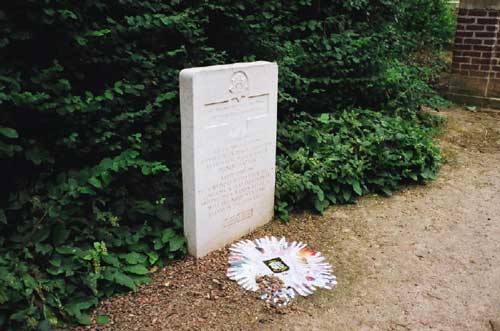
The Devonshires reached their objective at very heavy cost in casualties; and when they returned that afternoon, there were so many dead by the trench that it was made into a mass grave and sealed over with the notice ‘The Devonshires held this trench - The Devonshires hold it still.’
The Devonshires reached their objective at very heavy cost in casualties; and when they returned that afternoon, there were so many dead by the trench that it was made into a mass grave and sealed over with the notice ‘The Devonshires held this trench - The Devonshires hold it still.’